How to use an AI math solver as a tutor, not a copying machine
A simple routine for learning from an AI math solver: try first, read the steps, find your mistake, then re-do the problem blind.
An AI math solver will hand you the answer in seconds. That is the problem. The answer was never the point of homework. The point is that you can produce the answer yourself, later, on a test, with no phone on the desk.
Used one way, a solver is a patient tutor. It never sighs, never rushes you, and will explain the same step as many times as you ask. Used another way, it is a copying machine that leaves you exactly as stuck as before, just with finished homework. The app is the same in both cases. The order you do things in is what changes.
When a step-by-step explanation helps
A worked explanation helps most when you bring something to it.
You tried the problem and got stuck at a specific step. Now the explanation answers a real question: what comes after this line? You will recognize the missing step the moment you see it, because you already felt its absence.
You finished the problem and got a different answer than the book. Now the explanation is a comparison tool. Put your work next to it and find the first line where the two disagree. That line is your mistake, and it is usually the same kind of mistake across many problems. Sign errors. Dropped terms. A rule applied in the wrong direction.
You got the right answer but are not sure why the method works. Reading a clean explanation of something you already did is a quiet way to make it stick.
In all three cases the pattern is the same. You did work first, so the explanation had something to attach to.
When it quietly becomes copying
Copying rarely feels like copying. It feels like being efficient.
It is late, half the problem set is left, and you are tired. You photograph a problem, the steps appear, you write them down, next problem. The homework gets done. Nothing else happens. No part of that loop asked your brain to do anything but transcribe.
The test is where the bill arrives. Test problems are cousins of homework problems, not twins. If you copied the homework, the cousins look like strangers.
Two honest signs you have crossed the line. You cannot start the next similar problem without the app. And you read the steps top to bottom without once pausing to ask why a step is allowed. If either is true, stop and switch to the routine below.
A routine that keeps the learning in
This takes a little longer per problem and much less time per topic, because you stop relearning the same thing every week.
Try first. Give the problem a real attempt on paper before you touch the app. A failed attempt is fine. A failed attempt is the whole trick, because it tells you exactly what to look for in the explanation.
Photo the problem, then read the steps once, hands off. Do not write anything yet. Read the full explanation and at each line ask one question: why is this allowed? If a line feels like magic, that line is the thing you need to learn, not the answer at the bottom.
Find the split. Compare the steps to your attempt. Find the first line where your work and the explanation part ways. Name the mistake in plain words. "I forgot to flip the inequality." "I distributed into only one term."
Re-do it blind. Close the app. Take a blank page and work the problem from the start, no peeking. If you get through it, you have learned it, at least for today. If you stall, read the steps again and repeat. The blind re-do is the only step on this list that proves anything.
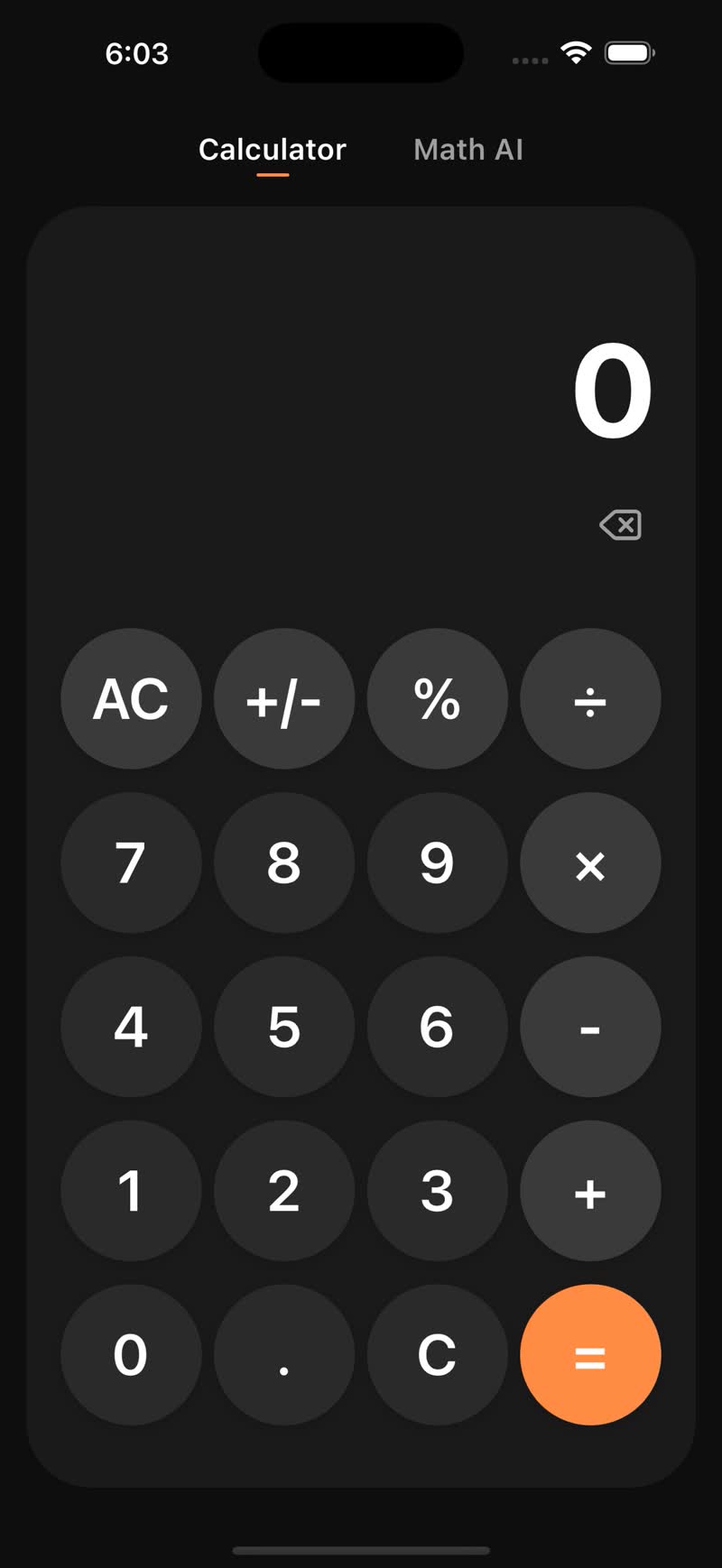
Any solver that shows its steps works for this routine. The one we build at Viral Labs is AI MathMaster. You can type a problem or take a photo of handwritten or printed work. It returns the answer with a clear step-by-step explanation, with equations rendered cleanly in LaTeX. There is also a fast calculator for the everyday stuff. Full disclosure, it is ours, and it is free to download.
What parents can do
You probably forgot this math. That is normal. You likely have not factored a quadratic since school, and pretending otherwise helps nobody.
A solver fixes the awkward part. Photograph the problem yourself and read the steps before you sit down to help. A few minutes of refreshing beats an evening of bluffing.
Then do not explain. Ask. Have your kid walk you through their work line by line, and when they say something you do not follow, say so. Explaining a step to a confused adult is a real test of understanding. If they can teach it, they know it.
Watch the order, not the screen time. App after a real attempt is studying. App before any attempt is copying, and no parental control fixes that.
Where AI solvers still get it wrong
AI solvers make mistakes, and they make them in full confidence. A wrong answer reads exactly as smoothly as a right one. There is no stammer to warn you.
Misreads are the common failure. A handwritten 7 taken as a 1, a lost minus sign, a squiggle read as an exponent. Any of these produces a perfect walkthrough of the wrong problem. Before you read the steps, check that the problem on screen matches the one on your page.
So keep the textbook in the loop. Check answers against the back of the book when it has them. Compare the method with the worked examples from class, because your teacher may want specific steps shown, and a correct answer by an unfamiliar route can still cost marks. When the app and the textbook disagree, the textbook wins until a human says otherwise.
The short version
Try first. Read the steps as an explanation, not a script. Find where your work split from the correct path. Re-do the problem blind. Keep the textbook as the referee.
A solver is a tutor or a photocopier. You decide which one, every night, by what you do before you open it. The rest of our small apps are on the apps page, each built on the same idea: one job, done honestly.